
Family travel is one of the most rewarding experiences parents can give their children. From exploring new cultures to bonding on road trips, vacations create memories that last a lifetime. But alongside the excitement, parents often face a hidden challenge: getting toddlers to sleep.
At home, toddlers thrive on structure. They know when to brush their teeth, when pajamas go on, and when the lights turn out. That sense of predictability helps them feel safe and relaxed. Travel, however, shakes up the schedule. Late-night flights, long drives, hotel stays, and jet lag can leave little ones overstimulated and overtired. And when toddlers don’t sleep well, the whole family feels it.
The good news is that parents can take steps to protect toddler sleep routines while traveling. With a mix of preparation, creativity, and flexibility, bedtime doesn’t have to be a battle. Instead, it can remain the comforting anchor of your family’s adventures.
Why Travel Disrupts Toddler Sleep
To understand how to preserve routines, it’s important to first know why travel throws toddlers off track.
- New environments feel unfamiliar. Hotel rooms, rentals, and relatives’ homes don’t smell, look, or sound like home. This makes toddlers alert instead of relaxed.
- Time zone shifts are confusing. Even a one- or two-hour difference can throw off a child’s circadian rhythm.
- Overstimulation wears them out. Sightseeing, airports, new foods, and meeting new people overload toddlers’ senses, making it harder to wind down.
- Parental flexibility can backfire. Many parents allow exceptions on vacation, a late dinner, skipping naps, or more screen time. Toddlers notice quickly, and routines unravel.
- Travel logistics disrupt sleep. Naps get missed during long flights, and bedtime can clash with late check-ins or noisy hotel hallways.
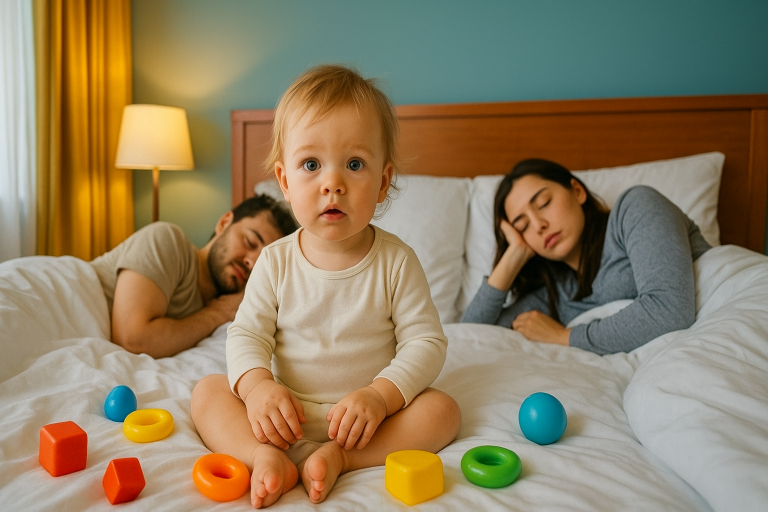
The impact is significant: toddlers resist bedtime, wake more often, and sleep less deeply. This means cranky mornings, frequent meltdowns, and parents who return home more exhausted than when they left.
Why Consistency Matters More on the Road
Toddlers thrive on familiarity. At home, the bedtime routine is more than a schedule, it’s a signal. Pajamas, brushing teeth, dim lights, and bedtime stories all tell the brain: It’s safe to rest.
When everything else changes during travel, consistency in sleep cues provides stability. A toddler who hears the same story or snuggles the same blanket feels reassured, even in an unfamiliar environment.
Consistency doesn’t mean perfection. It’s impossible to make every bedtime identical to home while traveling. Instead, it means keeping enough of the core routine, the sequence of events and familiar cues, so toddlers recognize that bedtime is still bedtime.
Tools to Support Toddler Sleep Routines While Traveling
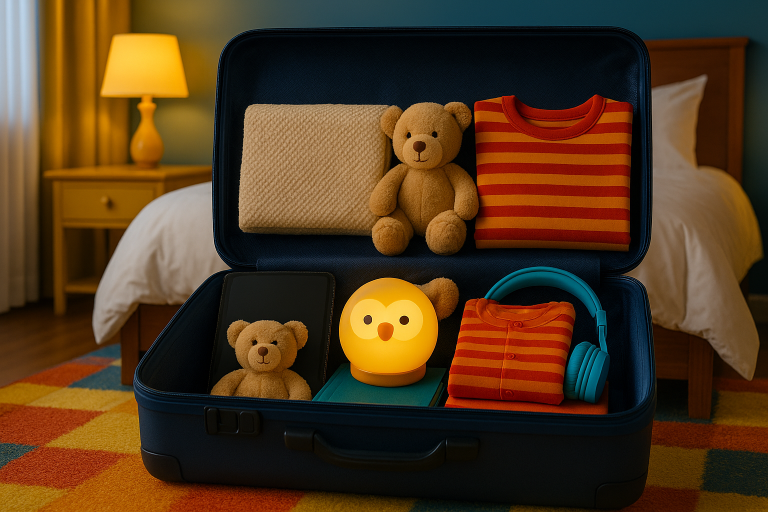
Parents don’t need to pack the whole nursery to maintain routines. A few key items can go a long way:
- Bedtime story apps: Apps like Snoozly let kids hear the same calming voices and narratives at home or on the road. Unlike video content, these stories are soothing and screen-free.
- Comfort objects: A stuffed animal, blanket, or pillow from home makes unfamiliar spaces feel safer. The smell and texture trigger a sense of familiarity.
- White noise machines or apps: These mask disruptive noises — like hotel guests in the hallway, traffic outside, or an airplane engine.
- Portable blackout curtains: Not every hotel has thick curtains. Travel shades or blackout covers block light, especially useful during naps.
- Nightlights: A soft glow can ease fears in new environments.
- Routine checklists: Parents can keep the bedtime sequence — bath, pajamas, story, lights out — the same as at home.
These items fit into a carry-on or suitcase and provide the building blocks for a consistent routine anywhere.
Parent-Tested Strategies for Smooth Sleep on the Road
Every family finds their own tricks, but here are strategies that have helped countless parents:
- Start bedtime rituals early. If bedtime falls mid-flight, begin calming rituals in the airport lounge or car ride. A short story and dimmed lights set the tone.
- Pack sleep essentials. Keep a small bag with the bedtime “must-haves.” This avoids late-night searches through luggage.
- Adjust for time zones gradually. If traveling across zones, shift bedtime by 15–30 minutes per day leading up to the trip. This helps the toddler’s body adapt.
- Balance busy schedules. Avoid overscheduling sightseeing. Build quiet breaks into the day to prevent overstimulation.
- Stick to routines, even if later. If bedtime gets delayed, keep the same steps. The sequence matters more than the clock.
- Limit stimulating screens. Skip cartoons before bed. Opt for audio-only storytelling or calm play instead.
- Use naps wisely. Avoid letting toddlers nap too late in the day, even if they’re tired from travel. This preserves nighttime sleep.
- Stay flexible but firm. Traveling means unexpected changes. Adapt when needed, but always protect the core elements of bedtime.
Creating Sleep-Friendly Environments Away from Home
Hotels and rentals aren’t designed with toddlers in mind, but small tweaks can make them more restful:
- Control light. Block light leaks with blackout curtains or cover gaps with towels. Lightproofing helps toddlers nap even in the middle of the day.
- Manage noise. Use white noise machines, apps, or even a running fan to drown out sounds from hallways or traffic.
- Rearrange furniture. Position toddler beds closer to parents for reassurance. In some cases, rearranging hotel furniture creates a cozier sleep nook.
- Bring familiar bedding. A pillowcase or blanket from home smells familiar and comforts toddlers.
- Keep it clutter-free. Limit visible toys at bedtime to reduce distractions.
Maintain bedtime cues. Whether it’s the same story app or lullaby, familiar signals help children relax.
The Role of Storytelling in Travel Bedtimes
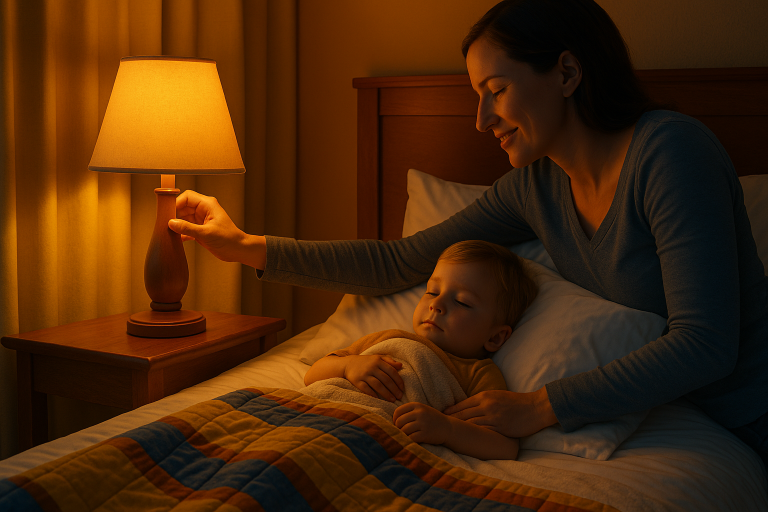
Storytelling is one of the simplest tools parents can use while traveling. It requires little space, no extra luggage, and instantly provides familiarity.
- Comfort from familiar tales. A story children know by heart reassures them in strange surroundings.
- Excitement from new stories. Fresh tales keep travel interesting and can become part of the adventure.
- Bonding time. Reading or listening together builds connection, even after a long day of sightseeing.
- Portable solutions. Apps like Snoozly allow parents to carry hundreds of stories on a single device, ensuring variety and consistency.
In the chaos of travel, storytelling creates a calm, predictable moment that tells toddlers: It’s time to rest.
Everyday Benefits Beyond Sleep
When toddlers sleep well on trips, the benefits extend far beyond bedtime.
- Happier children. Rested toddlers are more patient, playful, and willing to explore.
- More resilient travelers. Sleep helps them handle new experiences without becoming overwhelmed.
- Stronger immune systems. Adequate rest supports health, helping toddlers stay well during travel.
- More enjoyable trips. Parents get time to rest too, making family travel more rewarding.
In short, consistent sleep routines mean fewer meltdowns, more laughter, and better memories.

Conclusion: Restful Nights, Joyful Days
Traveling with toddlers can feel daunting, but bedtime doesn’t have to be a source of stress. By protecting toddler sleep routines while traveling, parents can turn challenging nights into peaceful ones.
Consistency is the secret weapon. Whether it’s a familiar bedtime story, a favorite blanket, or a steady sequence of rituals, toddlers thrive when bedtime feels predictable. Apps like Snoozly give parents modern tools to carry that consistency anywhere in the world.
Restful nights lead to joyful days. Families who prioritize sleep routines return home with not just memories of places, but the relief of knowing their child handled the trip with resilience and calm.